Showing posts with label new teacher. Show all posts

Sunday, June 5, 2016

Semester Syllabus, Pacing, and Topics


For our new Sociology teacher readers, or those looking to revamp their courses- this post will provide you with a few tips and ideas for designing your course.

*Disclaimer: I teach a semester long Sociology course.


1. First, chose the units you will teach. 

I use my textbook for this task. If you do not have class textbooks, I would order an exam copy from a publisher (or multiple). They are free, and will serve as a useful resource throughout this year. You can also use the ASA (American Sociological Association) Standards for this task.

My units include:
  1. Founders & Research Methods
  2. Culture & Media
  3. Deviance & Crime
  4. Socialization
  5. Stratification
  6. Race
  7. Family & Gender
2. Following, design your syllabus. 

Here is an AP Lang example.
I strongly advise to keep your syllabus to be 1 page, front and back. This way the most important information is in the document, and your students and parents are more likely to read it. (And you save some trees!) You could even let your creative juices flow and make your syllabus an infographic! (If this suits your fancy, here are two websites (1) (2) that I have used to make infographics.)

3. Include your VIP classroom procedures in your syllabus.

From my experience, it is crucial to include procedures and policies such as your late work policy, academic dishonesty policy, and absent work policy. (These 3 are very important) If you have your students and parents sign the syllabus, this helps to reinforce the policies throughout the duration of the course.

4. When tackling pacing, think about what you want your units to look like.

Ask yourself- How will I introduce your units? Will I need to provide your students work time for a project? How will I assess them, authentic assessment or traditional test? How excited am I about this topic, and will I want extra time to engage my students in my favorite activity we did in college? 

In my course, I try my best to introduce each unit with an experiment or simulation. I like to stick to approximately 10 class days per unit, including assessment day. I pace my course this way so that I have all of December (for semester one) for our final project, our Sociology Capstone (I will blog about this project in the future). 

5. Factor in any major projects into your pacing guide.

I used to integrate a semester long research project through out the course. This year, I am revamping the project into a capstone project at the end of the semester. You may like to implement 20% time.  Decide if this is something you want to include in your course. If so, schedule time for it, and include a little blurb about it in your syllabus!

6. Use resources besides your textbook! Or if you don't have a textbook, consider using these books as a resource for you!

Here are two supplemental texts that I love and use in my Sociology course:
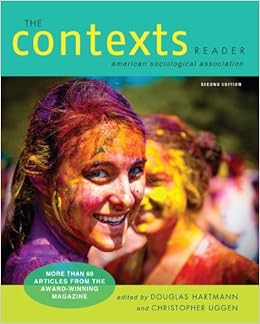
               The Contexts Reader                 Down to Earth Sociology, by James Henslin


As always, thank you for reading!


Friday, August 3, 2012

Textbook Companion Sites-Great Resources

While writing the blog on choosing a textbook, I decided also to do a post that has a listing of sociology text companion websites as well.  Some have freely available instructor resources while some have them password protected.  Please do take some time to check out these resources and bookmark those that have been most helpful.  If there are any activities or ideas worth sharing, let me know and you or I can blog them.  


Check out the activities that are posted on these sites-let us know which ones are working for you in your classroom.


McGraw-Hill's Mega-Site of Sociology Instructor Resources for the Schaefer text
http://highered.mcgraw-hill.com/sites/0073404144/sitemap.html


Richard Schaefer's Sociology: A Brief Introduction, 4/e
http://highered.mcgraw-hill.com/sites/0072435569/student_view0/


John J. Macionis' Sociology 10th Edition
http://wps.prenhall.com/hss_macionis_sociology_10/


Henry L. Tischler Cengage Advantage Books: Introduction to Sociology, 10th Edition
http://www.cengage.com/cgi-wadsworth/course_products_wp.pl?fid=M20bI&product_isbn_issn=9780495804406


William Kornblum  Sociology in a Changing World 
8th Edition ©2008   ISBN: 0495096350http://www.brookscole.com/cgi-wadsworth/course_products_wp.pl?fid=M20b&product_isbn_issn=9780495096351&discipline_number=0


Essentials of Sociology 
6th Edition ©2005  ISBN: 0534626769

David B. Brinkerhoff, Lynn K. White, Suzanne T. Ortega, Rose Weitz
http://www.wadsworth.com/cgi-wadsworth/course_products_wp.pl?fid=M20b&product_isbn_issn=0534626769&discipline_number=14


Social Problems Supersite
http://wps.ablongman.com/ab_socialprob_sprsite_1/11/3023/773890.cw/index.html


Henslin's Sociology Quizzing and Review Materials
http://wps.ablongman.com/ab_henslin_essentials_5a/9/2534/648834.cw/index.html


Henslin's Sociology Spanish Quizzing Materials
http://wps.ablongman.com/ab_henslin_sociology_8/43/11215/2871175.cw/index.html


The Teaching High School Sociology Web Site

Wednesday, August 1, 2012

I'm New to Teaching Sociology: Now What?

Let's assume that you were like me 25 years ago and given an assignment to teach sociology at the high school level.  I had taken some sociology courses, but I had no usable textbook and was pretty clueless.  Where do you begin?  What should you teach?  What the heck is sociology and how is it different from psychology or history anyway?

There are a few steps to take if you are completely new to sociology.  Feel free to skip steps based upon your experience level.

Step 1:  Determining what sociology is


Check out this entry of defining sociology:
http://teachinghighschoolsociology.blogspot.com/2012/08/what-is-sociology-some-definitions.html

Get your hands on as many good sociology readers as you can find.  Read the intro chapter from at least three different texts.  That will give you a good idea of the readability of the text as well as a better understanding of the sociological perspectives.  It will take some time, but will be well worth it.


Step 2:  What should be in my sociology course?

The American Sociology Association Curriculum--click here for link
This is an intro college curriculum, so high school teachers can leave out a few topics.  What I teach can be found at this blog entry.
http://teachinghighschoolsociology.blogspot.com/2012/03/sociology-what-to-teach.html


Step 3:  What are some basic tools that I can use to make sure I stay ahead of the kids?


Read, that is to say, actually study the textbook/reader you are using.  Underline, highlight and mark up the text with questions in the margins.  This intellectual dissection of the material will give you knowledge of the topic, but also insight into what the students are experiencing.

But as I was reminded at the AP Psychology reading, when faced with a question, ask the student, "how would you understand it?"  As they explain, listen and see if it makes sense.  If it does not, ask follow up questions for clarification.  You do not need to know everything.  Keep some notecards around for kids to write questions on.  Admit when you do not know an answer.  Tell the kids that you'll need to look it up, that you do not want to give them wrong or misleading information.  The more honest you are about this, the more forgiving and supportive they will be.


Step 4:  How can I get my kids interested and still "teach" sociology?


This is where projects come in.  Sociology is not on anyone's list of standardized testing.  It's nearly always an elective.  Know your students.  What interests them?  Using your library media teacher (if you are fortunate enough to still have one), co-create at least one project where the kids are NOT doing a "bird project*"  Make the project on that allows the kids to get creative but still deal with sociological concepts.

Find some controversial readings about a topic that interests them.  Ask questions.  What do they think?  WHY have they reached that conclusion?  How does this debate tie into sociology?

Check out the various projects on this blog and in other teaching sociology blogs.  There are some really amazing ideas out there.


*a bird project is one where a student tells you the name of the bird, what it looks like, what it eats, where it lives, how long it lives, etc. It is a regurgitation of easily 'googled' facts and requires virtually no thinking. These are to be avoided like the plague and replaced with projects that include critical thinking and higher order thinking skills. Acknowledgement to Dr. Doug Achterman who has helped me create a variety of projects in my classes.


Step 5:  Where can I get support?

The ASA Sociology listserv
The Teaching High School Sociology Blog
Sociology Sal's Blog, "Ways of Thinking"
Join the ASA High School Affiliate Program (January to December)


Step 6: Knowing Yourself


Know that it will take you at least a couple of years (four or more times teaching the course) to get comfortable with teaching sociology.   Accept that.  The sooner you do, the more you will enjoy the course while you keep learning about it.

photo credit: http://awkwardlistdotcom.files.wordpress.com/2012/03/ahhh.jpg

The Teaching High School Sociology web site