Showing posts with label 02 Culture. Show all posts

Tuesday, June 14, 2016

StoryCorps in the Sociology Classroom

I love a good story. Don't we all love a good story? This is why StoryCorps is my favorite podcast. I am so excited to begin the conversation of how we can integrate it into our classrooms.

Here is an introduction to StoryCorps from their founder, Dave Isay:


StoryCorps reminds me of Humans of New York because it displays raw emotion from real people and real relationships in a small glimpse of these people's lives. These short stories serve as a great free supplemental resource for our Sociology class.

Due to the diversity of stories they have recorded, there are limitless ways to incorporate this resource into your classroom. By searching their website by theme, you could find a story/podcast to introduce almost any of our units. (The transcripts of each podcast are also available for each story.) Hearing these short podcasts, from real people could make our course come alive for our students, they can help our students relate to our content, and is an excellent way for students to apply their sociological imaginations!

Here as an example of how you could use a podcast:

You could use this story about two black men who moved to Hollywood in the 1960s to become stuntmen to begin a discussion about the history of race, or the state of racism in different industries, or to connect current issues to the race unit (2016 Academy Awards).

Another idea is you could assign your students to record an interview with someone important in their lives, like Ms. Mieliwocki did. After listening to various podcasts throughout the course, it would be very empowering to "hand over the mic" to our students and to allow them to uncover powerful stories in their community. (Official project write up will be in the Google Drive folder before school starts.)


If you aren't intrigued yet, here is a glimpse of the impact StoryCorps has had:


The Sociology classroom can serve as the perfect platform to increase these understandings in our high schools. 

Please tell us your ideas of how you would like to use StoryCorps in the comments below!


Saturday, May 7, 2016

A Murder Over a Girl: Justice, Gender, Junior High

A Murder Over a Girl is a new book by Ken Corbett, a gender studies expert and NYU professor who went to Southern California to learn why a 15-year-old transgender student Larry 'Letitia' King was murdered. Corbett takes the reader through painstaking detail through the trial with its various witnesses, describing each with both a flair for observation, and inferences about the context, motivation, and meaning of the words they used. The book is not just about the murder or even the trial, but about how context matters for everything and how we shape the context in our own lives can lead us down very different paths. This book is fascinating, trouble, and insightful.

Cover Art
Corbett analyzes race, identity, poverty, culture, gun violence, and adolescence in a way I have never read before. Some parts of the book were hard for me to read due to the abhorrent nature of the ideology examined. That said, I believe this is a necessary book for all psychology and sociology teachers to help us understand the role that culture plays in our personal and collective lives. After so many years of teaching experience, I learned to look at education and my students through a new lens after reading this book.


From the Amazon description:
A psychologist's gripping, troubling, and moving exploration of the brutal murder of a possibly transgender middle school student by an eighth grade classmate On Feb. 12, 2008, at E. O. Green Junior High in Oxnard, CA, 14-year-old Brandon McInerney shot and killed his classmate, Larry King, who had recently begun to call himself "Leticia" and wear makeup and jewelry to school. Profoundly shaken by the news, and unsettled by media coverage that sidestepped the issues of gender identity and of race integral to the case, psychologist Ken Corbett traveled to LA to attend the trial. As visions of victim and perpetrator were woven and unwoven in the theater of the courtroom, a haunting picture emerged not only of the two young teenagers, but also of spectators altered by an atrocity and of a community that had unwittingly gestated a murder. Drawing on firsthand observations, extensive interviews and research, as well as on his decades of academic work on gender and sexuality, Corbett holds each murky facet of this case up to the light, exploring the fault lines of memory and the lacunae of uncertainty behind facts. Deeply compassionate, and brimming with wit and acute insight, A Murder Over a Girl is a riveting and stranger-than-fiction drama of the human psyche.

From the Publisher:
On February 12, 2008 in Oxnard, CA, 14-year-old Brandon McInerney and the rest of his eighth grade class walked to the computer lab with their teacher, Dawn Boldrin. As his classmates typed their history papers, Brandon quietly stood and shot 15-year-old Larry King—who for just two weeks had been wearing traditionally female accessories and identifying as “Leticia”—twice in the head. Larry died in the hospital two days later. Psychologist Ken Corbett was unsettled by the media coverage that sidestepped the issues of gender identity and race, and went to California to attend the trial. In his new book, A MURDER OVER A GIRL, Corbett, a leading expert on gender and masculinity, details the case, and all the social issues still littering the American landscape eight years later. The brutal murder begged the question: How this could happen? Ellen DeGeneres spoke out; Newsweek and The Advocate ran cover stories. Once again, a “normal boy” like Brandon had taken a gun into a school and killed another student in cold blood. But others, still, wondered: How could this not happen? In many ways this was a “perfect storm” of race, poverty, gun violence, and gender identity fueled by ignorance and fear. Brandon had been raised by drug-addicted parents. His mother shot his father days before their wedding, and his father later shot his mother in front of him. His home was a veritable culture of guns. Larry’s birth mother was a 15-year-old drug addicted prostitute. He had recently been removed from his adoptive parents’ home after reporting abuse. Larry identified as gay from the age of 10, and by 15 had realized he was a girl. He wore makeup and stilettos to school with his uniform and had asked the boy who would be his killer to be his valentine. Brandon says he was being sexually harassed by Larry and sought peace the only way he knew how. Eight years later, the citizens of this country have yet to get on the same page on so many of the major issues at play: gender identity; sexual and racial equality; gun control; drug laws. Neither experts nor lawmakers nor voters can come to a consensus, and yet, teachers—most of whom have received no training in any of these areas—are thrust to the forefront in the classroom.


 posted by Chuck Schallhorn

The Teaching High School Sociology website

Wednesday, January 28, 2015

Ghettocide: A True Story of Murder in America

The other day I had one of those NPR moments when I was driving home and could not turn off the engine until I had finished listening to the story that was playing.  It was an interview with the author of Ghettocide: A True Story of Murder in America.  The author was talking on Fresh Air and discussing different kinds of grief that people experience.  She had interviewed many people who had lost loved ones and she noticed that their experiences with death were different and had longer lasting impacts especially if there was no closure of an arrest of the perpetrator.  Her interview was so riveting, I ordered the book and will receive it tomorrow.

Listen or read here: http://www.npr.org/2015/01/26/381589023/ghettoside-explores-why-murders-are-invisible-in-los-angeles

Here is her appearance on the Daily Show


posted by Chuck Schallhorn


The Teaching High School Sociology web site

Friday, January 23, 2015

The Crayola Monologues: A Commentary on Color and Society


I found this as a video file that I received from Amy Jones at a conference a few years ago. I am still sifting through all the amazing resources she shared.

This video is called, "The Crayola Monologues."  It is sharable for all ages, but especially great for social psychology and prejudice/bigotry issues.  To be honest, I love this video.  The artist who created it can be found at this link: http://www.nathangibbs.com/crayola-monologues/.  This page contains lengthy commentary and exploration of color, race, and ethnicities and issues surrounding these ideas in our society.


posted by Chuck Schallhorn

The Teaching High School Sociology web site

Thursday, October 23, 2014

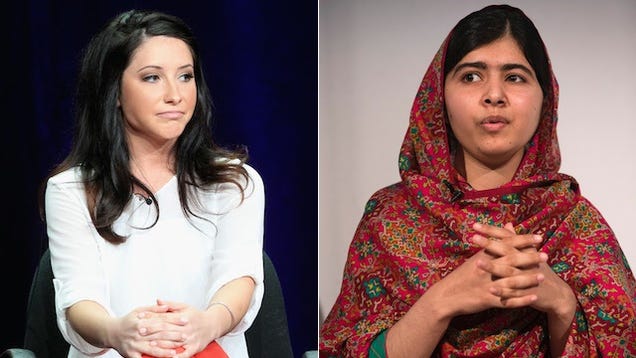
Bristol Palin and Malala Yousafzai, a Memoir Comparison on Jezebel


I recently posted this article on my Facebook page:  http://jezebel.com/their-struggles-bristol-palin-malala-yousafzais-memo-1647761703?utm_campaign=socialflow_jezebel_facebook&utm_source=jezebel_facebook&utm_medium=socialflow

The article compares the memoirs of the two young women.  One of my former students wrote this in response:

I've been trying to write out why this article bothers me, and I feel like I just can't put my finger on it. What do we gain by comparing these two women this way? What point was this article trying to make? That Bristol Palin is a moron? Do they just want to make fun of someone who clearly isn't doing well? Bristol Palin was mocked by an entire nation for something that happens to teenagers all the time. She has been and apparently still is being used as a political tool, and as fodder for gossip. So what if she wrote a book about it? Why does her story have to be compared to Malala's? Why can't we discuss it as someone coming to terms with, I don't know, being bullied by an entire country, feeling like she has to justify her life? Or does the article just want to make her look like a dumb white girl? I found this article to be INCREDIBLY petty.

Here is my response:

As I was reading it, while Bristol was the main target, she remains for me, the personification of the ugly and narcissistic American. She has made various choices to put herself in the media eye after her mother did so. She is damaged and easily made fun of. That said, she is emblematic of Americans and how immature we are. Was she the comparison? Yes. Has Malala gotten a lot of press for her amazing acts of courage? Yes. Are they incredibly different? Yes. I see one as the ideal and one as the clown in terms of what we expect from our young people. Bristol is the caricature of American teens--uneducated, stupid, pregnant, beer-drinking, etc. Malala is who we aspire to be. What better way to see he difference than with a side by side comparison. I understand your issue with the article, but understood it in a different way.
Perhaps a dissection or discussion of this kind of article would be appropriate for a gender or sociology class.


The Teaching High School Sociology web site

Wednesday, October 22, 2014

Emotions, Language, and the Untranslatable

This is a cross-post to both the Teaching High School Sociology and Psychology Blogs.  This chart shows primary emotions and the less-used words that are related.  The chart also offers us some untranslatable nuanced terms that are found in other, non-English languages.

It is an infographic that I found from Mental Floss at this address:
http://mentalfloss.com/sites/default/legacy/blogs/wp-content/uploads/2013/01/Other_Languages_b1.png


The Teaching High School Sociology web site

Monday, October 29, 2012

Halloween Costumes--An Analysis

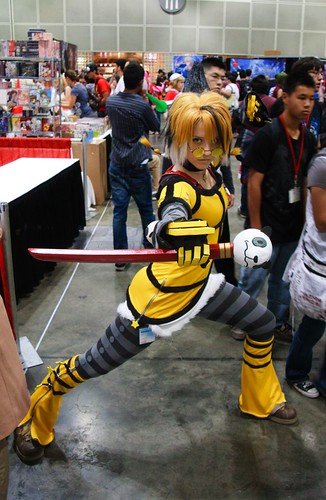
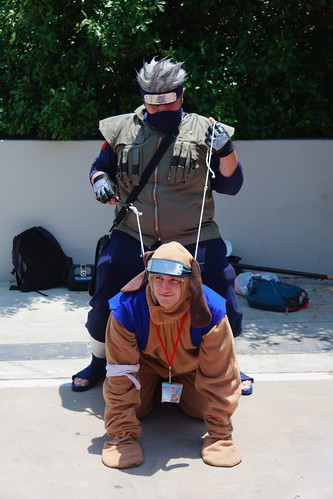
I posted the blog below on the Teaching High School Psychology blog earlier.  As I was thinking about it, I realized that from a sociological perspective, analyzing costumes in the aggregate could be a great observational activity lending connections to socialization and culture and subcultural norms.

Have students create categories of costume types (the Teaching Tolerance link has some good examples).  Is the costume ethnic/racial, a fictional character from childhood or from some literature, a political figure, or something humorous.  Classes from different schools could do this analysis to see if there are different patterns that emerge in different schools, regions, or states.  What are acceptable costumes for what students wear at school versus what they might wear to parties with their friends or families?  What norms are there for the various events?  What consequences/sanctions are given for those who violate the norms of their group?

It seems to me as I write this that there are so many possibilities for this activity.  If you can, please be sure to add more in the comments section.

======================================================================
I am in my social psychology unit for regular psych and decided to take a look at what was available for analyzing costumes--whether it be for stereotypes or gender or politics.  For this post, I will simply share what I discovered in terms of some examples of what is out there.  Before using any of these with students, I would recommend checking them out yourself first.  Whether it's unleashing a hidden side of yourself or modeling someone you admire or mocking someone you abhor, the costume you wear may say a lot about you and your personality.

Just like projective tests, I would recommend being very cautious using any kind of analysis in class with students.  Perhaps it would be better to have them do the analyzing and the adults guiding them in that pursuit.

Teaching Tolerance--the most school-appropriate item I could find--costume type, gender representation, racial/ethnic or age representation
http://www.tolerance.org/activity/what-do-halloween-costumes-say

Psychoanalyzing 10 Popular Halloween Costumes from US News
http://health.usnews.com/health-news/articles/2012/10/25/psychoanalyzing-10-popular-halloween-costumes

A Psychoanalysis of Costumes from Boston.com
http://www.boston.com/dailydose/2012/10/29/weekly-challenge-psychoanalysis-your-halloween-costume-choice/Ad5FA9h9ppnFasYbkIf19J/story.html

Emme Magazine (I had not heard of it either)--a cheeky examination of costumes for women
http://www.emme-magazine.com/2012/10/21/your-halloween-costume-your-personality-dr-hughes-analyzes-what-your-halloween-costume-reveals-about-you/


Arizona Central--Women Rethinking Their Role as Eye-Candy
http://www.azcentral.com/thingstodo/specials/halloween/articles/20121026women-rethinking-roles-as-halloween-eye-candy.html

For Humor--decoding her/his costume (From Match.com)
http://www.match.com/magazine/article/9024/Decode-Her-Halloween-Costume/
http://www.match.com/magazine/article/9023/Decode-His-Halloween-Costume/

Good Girls Go Bad, For a Day
http://www.nytimes.com/2006/10/19/fashion/19costume.html?pagewanted=all&_r=0

The Glory of Wearing the Same Costume Every Year
http://www.theatlantic.com/entertainment/archive/2012/10/the-glory-of-wearing-the-same-halloween-costume-every-year/264060/

Media Analysis--a Cultural Appropriation of Halloween
http://www.karanovic.org/courses/mca006/2012/10/26/cultural-appropriation-of-halloween/

For those who like stats and lots of data analysis with their economics, there is this Stanford paper
http://www.stanford.edu/class/cs341/reports/04-PraveenCS341ProjectWrite-Up.pdf

Images courtesy of a search.creativecommons.org with images available for use without copyright protection.

posted by Chuck Schallhorn
The Teaching High School Sociology web site

Sunday, October 28, 2012

Offensive Clothing Designs

10 of the Most Offensive Clothing Designs
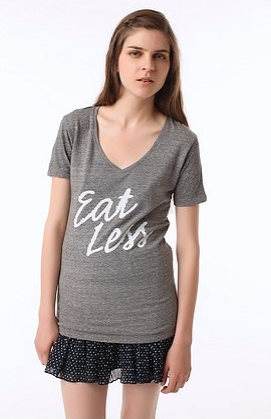
This article on AlterNet really could create some fascinating discussion about values, offense (many of my students claim not to be offended by much), and generation gaps.  Whether it's a shirt that is "pro-ana," that is, promoting anorexic behavior or sneakers with a shackle, there is much to discuss with this article.

The article can be found here:
http://www.alternet.org/culture/10-most-offensive-clothing-items-ever-created?paging=off


Tuesday, August 14, 2012

Culture, Media and Photography of Athletes

I ran across this article while reading some others on Slate.com.  The title got me:  "What if every Olympic sport was photographed like beach volleyball?"  I knew exactly what they were referring to--the obsession to objectify and de-head the photos of the players and focus on particular body parts.  Granted, the uniforms for beach volleyball are already tiny bikinis for the females and board shorts for me, but check out this article and see the examples of how men would be photographed in the same style.
http://www.metro.us/philadelphia/international/article/1148979

You could use this in a gender and media unit or in the culture unit.  Great examples.  I'll let the reader check out the link rather than posting them here--I would rather make this high school classroom friendly without some contextualizing.


The Teaching High School Sociology web site

Friday, March 16, 2012

Utopia Exercise


One of the enjoyable things for me when I teach is tapping into the collective imaginations of my students.  The activity below is one of those assignments when I either love or hate the fact that I assigned the thought experiment ("gedankenexperiment" in German).  

This has both flopped and succeeded beyond my wildest dreams.  Some students just have the ability to make decisions about what they do and do not value.  Others have trouble determining what the name of the culture should be.  To watch the dynamics is fun and potentially painful.  As they do this activity, I walk around the room asking clarifying questions, attempting to help them see this new society from the ground up.

After I give them anywhere between thirty and sixty minutes (depending upon my judgment of how seriously and how well they are doing on the activity), we then share out the core of our new societies and then ask questions about how functional or "do-able" their ideas are.  When they take many of their ideas to the logical extension, they begin to understand.  One example was stood out was the culture of the pot-heads.  Everyone had to smoke pot in their culture.  They got a kick out of it.  When the class started asking about sanitation, food growth and consumption, the school and governmental systems, the group realized the folly of their idea, but it was worth it.

As a side note on values, I value the intellectual property rights of those on the internet.  Any photos I use are either my own or searched through the creative commons web site for the world to use, copy, and remix.  If I become aware of use of copyrighted material, I will immediately take it down.

A .doc copy of this exercise can be found here.

===============================================================

Utopia—Is It Within Our Grasp?
First and Last Names of Group Members


For a long time, younger people have said that our cultural leaders don’t know what they are doing, are corrupt and should be replaced.  Fictional “dystopias” include 1984 and Brave New World.  We are going to examine the flip side, or the positive aspect.  We will be creating an ideal culture that has everything you want and need.

Name of your culture                                                                                                                                                                        
New Ideas
Reasons for why the changes are taking place (i.e., rationale for value/law/attitude)
Values (what is important to the group?)
(These should be chosen freely, chosen among alternatives, after consideration of consequences of alternatives, be prized and cherished, publicly affirmed, and acted upon consistently.)


Rules & Laws


Attitudes that people in this culture will have


Tuesday, March 13, 2012

Culture: My understanding of how to "get" it

As part of teaching culture, I begin with this "lecture reading" along with the graphic showing the relationship among the four key concepts to understanding any culture/group.  As I work with my kids in understanding the connections and interrelations among these concepts, they learn a more complete view of cultural understanding.

To me, it is impossible to understand culture without examining these concepts together.


Values, Norms, Roles and Sanctions Lecture

            Values are important aspects of a culture that a group feels are either desirable or undesirable.  These standards are shared criteria for distinguishing good from bad, acceptable from unacceptable.  Values are not something that can be decided by scientific experiment, but rather are matters of collective preference.  Many values are connected with intense sensations of attraction or repulsion, approval or disapproval, which we have learned to feel about them. 
            Values have the following qualities:
                                    A.     Chosen freely
                                    B.     Chosen among alternatives
                                    C.     Chosen after thoughtful consideration of the consequences of each alternative
                                    D.     Prized and cherished
                                    E.      Publicly affirmed
                                    F.      Acted upon
                                    G.     Consistently acted upon

            If one knows the values of a culture, one can make certain predictions concerning the way its members will behave.  Values are the link between beliefs and the rules of a culture, called norms.
            Norms are shared rules of conduct, directing what should and should not be done by certain individuals under certain specified conditions.  It is through norms that values are put into action.  There are two kinds of norms.  Folkways, which are connected to daily behavior for what to do, customs and fashions, the violation of which will not produce a major problem.  However, a more (pronounced moor-ay) is a norm, that when broken, will produce a strong public outrage.  Examples of these include rape, incest, murder, etc. 
            Norms are very closely related to roles, which are the parts we play in society.  In our daily lives, we are putting on different masks, all of which reflect a part of us.  Some look upon this as "posing," but it is really a just a way to cope with the changing demands of a variety of situations.  Each role is built up from many norms.  Therefore, norms can be thought of as the building blocks of roles.  Each part we play has a series of expectations or norms.  As a student, you have a part to play with many expectations associated with it.  These expectations can be considered norms or rules for how you should and shouldn't behave.
            To enforce norms, cultures and other groups create sanctions, rewards or punishments that are designed to keep deviant behavior at a minimum.  They may range from a harsh look or a hug, to the silent treatment, incarceration, or even the end of life.  It will depend on the norm broken, the role of the person, and the value that was threatened.