Friday, June 5, 2026

This Blog is Archived--No Access to Website/Files

Hi Everyone,

You probably have noticed that we have not posted anything for years. Just to confirm that this blog is in archive mode only. We cannot guarantee links will still work, but there are still some great teaching ideas within the posts. Thank you to everyone who worked with us and read our posts during the years we were posting.

Chuck Schallhorn

Tuesday, June 14, 2016

A Conversation Starter for Your Race Unit


Kerry Washington and Aziz Ansari Swap Racist Casting Stories

StoryCorps in the Sociology Classroom

I love a good story. Don't we all love a good story? This is why StoryCorps is my favorite podcast. I am so excited to begin the conversation of how we can integrate it into our classrooms.

Here is an introduction to StoryCorps from their founder, Dave Isay:


StoryCorps reminds me of Humans of New York because it displays raw emotion from real people and real relationships in a small glimpse of these people's lives. These short stories serve as a great free supplemental resource for our Sociology class.

Due to the diversity of stories they have recorded, there are limitless ways to incorporate this resource into your classroom. By searching their website by theme, you could find a story/podcast to introduce almost any of our units. (The transcripts of each podcast are also available for each story.) Hearing these short podcasts, from real people could make our course come alive for our students, they can help our students relate to our content, and is an excellent way for students to apply their sociological imaginations!

Here as an example of how you could use a podcast:

You could use this story about two black men who moved to Hollywood in the 1960s to become stuntmen to begin a discussion about the history of race, or the state of racism in different industries, or to connect current issues to the race unit (2016 Academy Awards).

Another idea is you could assign your students to record an interview with someone important in their lives, like Ms. Mieliwocki did. After listening to various podcasts throughout the course, it would be very empowering to "hand over the mic" to our students and to allow them to uncover powerful stories in their community. (Official project write up will be in the Google Drive folder before school starts.)


If you aren't intrigued yet, here is a glimpse of the impact StoryCorps has had:


The Sociology classroom can serve as the perfect platform to increase these understandings in our high schools. 

Please tell us your ideas of how you would like to use StoryCorps in the comments below!


Sunday, June 5, 2016

Semester Syllabus, Pacing, and Topics


For our new Sociology teacher readers, or those looking to revamp their courses- this post will provide you with a few tips and ideas for designing your course.

*Disclaimer: I teach a semester long Sociology course.


1. First, chose the units you will teach. 

I use my textbook for this task. If you do not have class textbooks, I would order an exam copy from a publisher (or multiple). They are free, and will serve as a useful resource throughout this year. You can also use the ASA (American Sociological Association) Standards for this task.

My units include:
  1. Founders & Research Methods
  2. Culture & Media
  3. Deviance & Crime
  4. Socialization
  5. Stratification
  6. Race
  7. Family & Gender
2. Following, design your syllabus. 

Here is an AP Lang example.
I strongly advise to keep your syllabus to be 1 page, front and back. This way the most important information is in the document, and your students and parents are more likely to read it. (And you save some trees!) You could even let your creative juices flow and make your syllabus an infographic! (If this suits your fancy, here are two websites (1) (2) that I have used to make infographics.)

3. Include your VIP classroom procedures in your syllabus.

From my experience, it is crucial to include procedures and policies such as your late work policy, academic dishonesty policy, and absent work policy. (These 3 are very important) If you have your students and parents sign the syllabus, this helps to reinforce the policies throughout the duration of the course.

4. When tackling pacing, think about what you want your units to look like.

Ask yourself- How will I introduce your units? Will I need to provide your students work time for a project? How will I assess them, authentic assessment or traditional test? How excited am I about this topic, and will I want extra time to engage my students in my favorite activity we did in college? 

In my course, I try my best to introduce each unit with an experiment or simulation. I like to stick to approximately 10 class days per unit, including assessment day. I pace my course this way so that I have all of December (for semester one) for our final project, our Sociology Capstone (I will blog about this project in the future). 

5. Factor in any major projects into your pacing guide.

I used to integrate a semester long research project through out the course. This year, I am revamping the project into a capstone project at the end of the semester. You may like to implement 20% time.  Decide if this is something you want to include in your course. If so, schedule time for it, and include a little blurb about it in your syllabus!

6. Use resources besides your textbook! Or if you don't have a textbook, consider using these books as a resource for you!

Here are two supplemental texts that I love and use in my Sociology course:
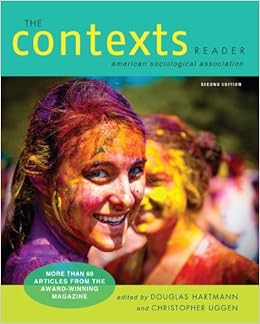
               The Contexts Reader                 Down to Earth Sociology, by James Henslin


As always, thank you for reading!


Saturday, May 7, 2016

A Murder Over a Girl: Justice, Gender, Junior High

A Murder Over a Girl is a new book by Ken Corbett, a gender studies expert and NYU professor who went to Southern California to learn why a 15-year-old transgender student Larry 'Letitia' King was murdered. Corbett takes the reader through painstaking detail through the trial with its various witnesses, describing each with both a flair for observation, and inferences about the context, motivation, and meaning of the words they used. The book is not just about the murder or even the trial, but about how context matters for everything and how we shape the context in our own lives can lead us down very different paths. This book is fascinating, trouble, and insightful.

Cover Art
Corbett analyzes race, identity, poverty, culture, gun violence, and adolescence in a way I have never read before. Some parts of the book were hard for me to read due to the abhorrent nature of the ideology examined. That said, I believe this is a necessary book for all psychology and sociology teachers to help us understand the role that culture plays in our personal and collective lives. After so many years of teaching experience, I learned to look at education and my students through a new lens after reading this book.


From the Amazon description:
A psychologist's gripping, troubling, and moving exploration of the brutal murder of a possibly transgender middle school student by an eighth grade classmate On Feb. 12, 2008, at E. O. Green Junior High in Oxnard, CA, 14-year-old Brandon McInerney shot and killed his classmate, Larry King, who had recently begun to call himself "Leticia" and wear makeup and jewelry to school. Profoundly shaken by the news, and unsettled by media coverage that sidestepped the issues of gender identity and of race integral to the case, psychologist Ken Corbett traveled to LA to attend the trial. As visions of victim and perpetrator were woven and unwoven in the theater of the courtroom, a haunting picture emerged not only of the two young teenagers, but also of spectators altered by an atrocity and of a community that had unwittingly gestated a murder. Drawing on firsthand observations, extensive interviews and research, as well as on his decades of academic work on gender and sexuality, Corbett holds each murky facet of this case up to the light, exploring the fault lines of memory and the lacunae of uncertainty behind facts. Deeply compassionate, and brimming with wit and acute insight, A Murder Over a Girl is a riveting and stranger-than-fiction drama of the human psyche.

From the Publisher:
On February 12, 2008 in Oxnard, CA, 14-year-old Brandon McInerney and the rest of his eighth grade class walked to the computer lab with their teacher, Dawn Boldrin. As his classmates typed their history papers, Brandon quietly stood and shot 15-year-old Larry King—who for just two weeks had been wearing traditionally female accessories and identifying as “Leticia”—twice in the head. Larry died in the hospital two days later. Psychologist Ken Corbett was unsettled by the media coverage that sidestepped the issues of gender identity and race, and went to California to attend the trial. In his new book, A MURDER OVER A GIRL, Corbett, a leading expert on gender and masculinity, details the case, and all the social issues still littering the American landscape eight years later. The brutal murder begged the question: How this could happen? Ellen DeGeneres spoke out; Newsweek and The Advocate ran cover stories. Once again, a “normal boy” like Brandon had taken a gun into a school and killed another student in cold blood. But others, still, wondered: How could this not happen? In many ways this was a “perfect storm” of race, poverty, gun violence, and gender identity fueled by ignorance and fear. Brandon had been raised by drug-addicted parents. His mother shot his father days before their wedding, and his father later shot his mother in front of him. His home was a veritable culture of guns. Larry’s birth mother was a 15-year-old drug addicted prostitute. He had recently been removed from his adoptive parents’ home after reporting abuse. Larry identified as gay from the age of 10, and by 15 had realized he was a girl. He wore makeup and stilettos to school with his uniform and had asked the boy who would be his killer to be his valentine. Brandon says he was being sexually harassed by Larry and sought peace the only way he knew how. Eight years later, the citizens of this country have yet to get on the same page on so many of the major issues at play: gender identity; sexual and racial equality; gun control; drug laws. Neither experts nor lawmakers nor voters can come to a consensus, and yet, teachers—most of whom have received no training in any of these areas—are thrust to the forefront in the classroom.


 posted by Chuck Schallhorn

The Teaching High School Sociology website

Saturday, April 23, 2016

Introductions and A Call for Input

Welcome back to the Teaching High School Sociology Blog. My name is Caitlin McGrew and I will be taking over this blog, from Chuck (thank you, Chuck!). I currently teach at Rutherford B. Hayes High School in Delaware, Ohio. Similar to Chuck, I plan to share resources and lessons so we can have an online community where we can connect, collaborate, maintain an updated curriculum, and continue to grow as Sociology teachers.

One space I plan to use to collaborate is a Google Drive folder in which I will store files I blog about, and other resources that are high quality for you to implement in your classroom. If you have a lesson or resource you wish to add to the folder, please email it to thssblog@gmail.com.

I hope to also include book and video reviews that are pertinent to our content, and appropriate for our students.

My AP Psych students and I were able to meet Dr. Zimbardo!
If you have a topic you are interested in reading about, a weak area in your course you want to improve, or resources you want reviewed, please send me an email at thssblog@gmail.com.

To conclude, here is a little background information about me: I have been teaching for 3 years in central Ohio, and I am originally from Northeast Ohio. I have taught World History, Sociology, Geography, and AP Psychology. I have presented at various local and state conferences on topics including the Flipped Classroom, Google Apps, and Mastery Learning. Thank you for reading my first blog post, and for joining me as we transition ownership of the THSS blog!

Sunday, August 2, 2015

First Day Activities for Sociology

A few teachers contacted me over the summer and one asked about starting the year with a "Bang!" Here is a copy of the email plus some additions.


Here is a file that I just received from a friend in Arizona that he uses for intro to psych https://drive.google.com/open?id=0B28t_LsPkwHebTdhZW1MeUQxblV6RlZuaUVrSEcyZVhqQ3NN 

===================================

You could do the birthday activity--have the kids arrange themselves in a line or circle (depending upon space) based on birthdays-Jan 1 on one end and Dec 31 on the other. Beforehand, you can make a bet with them about the likelihood of having any matching birthdays. The last time I did this last fall I had three sets of matching birthdays in a class of 35. 

===================================

You could use the Riding Hood Revisited reading and activity (on the blog) 
http://teachinghighschoolsociology.blogspot.com/2012/03/perspectives-activity-with-red-riding.html

===================================

You could use an adapted version of perspective that I use when I put a stuffed animal (I used a stuffed moose that has hidden eyes, tongue, and scarf to add to the mystery and incomplete observations that they all have) in the middle of the room and I ask the students to either draw it or describe it. Inquire as to why no one is describing the same thing. 

===================================

These are quizzes for understanding the culture of and understanding the knowledge of different social classes. Great stuff 
https://www.ahaprocess.com/wp-content/uploads/2013/08/Social-Class-Hidden-Rules-Quiz.pdf 

===================================

http://www.sociology.org.uk/lpsocsoc.pdf
http://www.lessonplanet.com/article/teacher-resources/ice-breakers-and-first-day-activities
http://www.thesociologicalcinema.com/blog/everythings-amazing-nobodys-happy-social-change-ice-breaker
https://www.pinterest.com/arzubal/first-week-activities-icebreakers-warmers/


===================================

So many possibilities with this one. For me, it depends upon what unit you are starting with, perspectives or culture. What do you think? If you have great ideas, please put them in the comment section.

The Teaching High School Sociology web site

Wednesday, March 11, 2015

Greek Life and Racism

After a discussion in class about the Oklahoma racist chant, one of my students mentioned seeing an article that included a picture of a sorority that posed with sombreros, moustaches, and signs that said, "I don't cut grass, I smoke it." I might add that that class is two-thirds Latino. That particular picture struck a nerve.  My students have heard the terms "beaner," "burrito-eater," and the like, but this one hit a little harder, especially when the photo appeared to be nearly exclusively white.

I did a quick search and discovered this article which cites a dozen examples, several that have pictures. I know kids are young and make mistakes. But these make me sick. This article could be great for a discussion on group decision-making, prejudice, stereotypes and so much more.
http://mic.com/articles/112240/12-incidents-that-prove-fraternity-and-sorority-racism-isn-t-just-an-oklahoma-problem


The Teaching High School Sociology web site

Monday, March 9, 2015

Fraternity and Racist Chants

Why does this not surprise me?

The more I learn about people, the more optimistic I am.  Then something like this happens and I get discouraged.  I could make a list of hundreds of recent events that detail poor behavior on the part of white people.  As a white person, it grieves me that anyone thinks like these young men or their counterparts around the nation and world.  As a teacher, I am constantly trying to fight the good fight to raise awareness about structural racism, discrimination, harmful attitudes, intergroup relations, and more.

So frustrating. Each day in the classroom gives me hope though.


The Teaching High School Sociology web site

Friday, March 6, 2015

Sneetches, Prejudice, Discrimination, and Status


Dr. Seuss gave us many classics in regards to human behavior. My personal favorite is "Sneetches," a story about two kinds of Sneetches, creatures who lived on the beach, some of whom had stars on their bellies, some who did not.

Those with stars fancied themselves better than the others and excluded those without stars from their social gatherings. Those with stars also had stereotypes about those without. This led to discrimination, name calling, and social shunning. Along comes an inventor who can put stars on those without. Conflict ensues when the originals with stars feel the need to change once all Sneetches had stars--they needed some visible identifier for in- and out-group labeling.

Then the inventor who took the stars off the original star-bellied Sneetches.  They reclassified the status of both kinds of bellies.

This new designation leads to chaos as both groups end up adding and subtracting the stars so that everything gets messed up from the original grouping.  No identifiers work for in- and out-group designations.

Lessons are learned and the scam artist leaves.

The video version is available here:


Posted by Chuck Schallhorn

The Teaching High School Sociology web site

Sunday, February 15, 2015

The Average Black Girl


A friend just posted this on her facebook page.  So incredibly powerful.  Take the time to listen to Ernestine Johnson.

Wednesday, January 28, 2015

Ghettocide: A True Story of Murder in America

The other day I had one of those NPR moments when I was driving home and could not turn off the engine until I had finished listening to the story that was playing.  It was an interview with the author of Ghettocide: A True Story of Murder in America.  The author was talking on Fresh Air and discussing different kinds of grief that people experience.  She had interviewed many people who had lost loved ones and she noticed that their experiences with death were different and had longer lasting impacts especially if there was no closure of an arrest of the perpetrator.  Her interview was so riveting, I ordered the book and will receive it tomorrow.

Listen or read here: http://www.npr.org/2015/01/26/381589023/ghettoside-explores-why-murders-are-invisible-in-los-angeles

Here is her appearance on the Daily Show


posted by Chuck Schallhorn


The Teaching High School Sociology web site

Monday, January 26, 2015

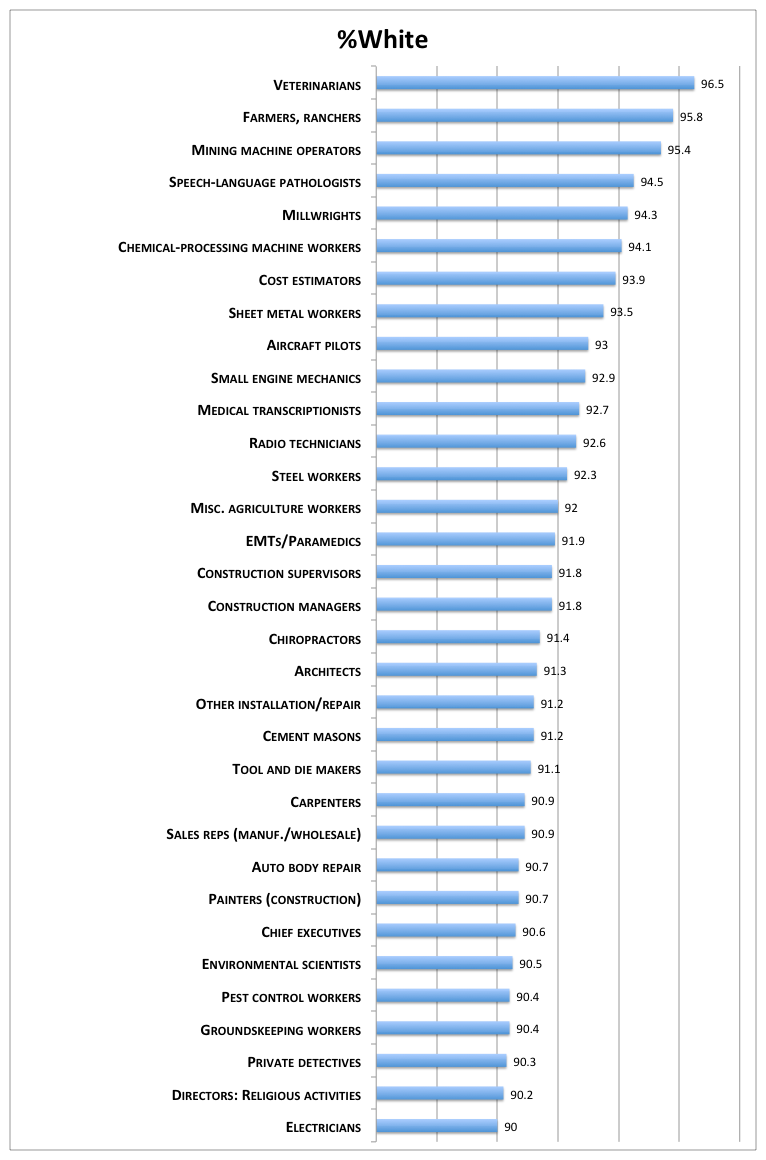
The Whitest Jobs in America

I knew segregation was still alive and well, but this article in The Atlantic shows just how segregated these aspects of America still is. Original article is here.


The Teaching High School Sociology web site

Friday, January 23, 2015

The Crayola Monologues: A Commentary on Color and Society


I found this as a video file that I received from Amy Jones at a conference a few years ago. I am still sifting through all the amazing resources she shared.

This video is called, "The Crayola Monologues."  It is sharable for all ages, but especially great for social psychology and prejudice/bigotry issues.  To be honest, I love this video.  The artist who created it can be found at this link: http://www.nathangibbs.com/crayola-monologues/.  This page contains lengthy commentary and exploration of color, race, and ethnicities and issues surrounding these ideas in our society.


posted by Chuck Schallhorn

The Teaching High School Sociology web site

Thursday, October 23, 2014

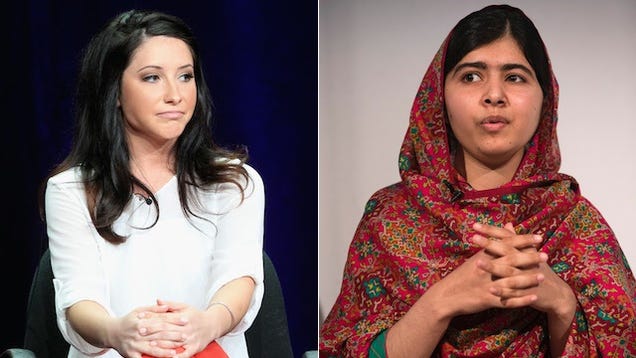
Bristol Palin and Malala Yousafzai, a Memoir Comparison on Jezebel


I recently posted this article on my Facebook page:  http://jezebel.com/their-struggles-bristol-palin-malala-yousafzais-memo-1647761703?utm_campaign=socialflow_jezebel_facebook&utm_source=jezebel_facebook&utm_medium=socialflow

The article compares the memoirs of the two young women.  One of my former students wrote this in response:

I've been trying to write out why this article bothers me, and I feel like I just can't put my finger on it. What do we gain by comparing these two women this way? What point was this article trying to make? That Bristol Palin is a moron? Do they just want to make fun of someone who clearly isn't doing well? Bristol Palin was mocked by an entire nation for something that happens to teenagers all the time. She has been and apparently still is being used as a political tool, and as fodder for gossip. So what if she wrote a book about it? Why does her story have to be compared to Malala's? Why can't we discuss it as someone coming to terms with, I don't know, being bullied by an entire country, feeling like she has to justify her life? Or does the article just want to make her look like a dumb white girl? I found this article to be INCREDIBLY petty.

Here is my response:

As I was reading it, while Bristol was the main target, she remains for me, the personification of the ugly and narcissistic American. She has made various choices to put herself in the media eye after her mother did so. She is damaged and easily made fun of. That said, she is emblematic of Americans and how immature we are. Was she the comparison? Yes. Has Malala gotten a lot of press for her amazing acts of courage? Yes. Are they incredibly different? Yes. I see one as the ideal and one as the clown in terms of what we expect from our young people. Bristol is the caricature of American teens--uneducated, stupid, pregnant, beer-drinking, etc. Malala is who we aspire to be. What better way to see he difference than with a side by side comparison. I understand your issue with the article, but understood it in a different way.
Perhaps a dissection or discussion of this kind of article would be appropriate for a gender or sociology class.


The Teaching High School Sociology web site

Wednesday, October 22, 2014

Emotions, Language, and the Untranslatable

This is a cross-post to both the Teaching High School Sociology and Psychology Blogs.  This chart shows primary emotions and the less-used words that are related.  The chart also offers us some untranslatable nuanced terms that are found in other, non-English languages.

It is an infographic that I found from Mental Floss at this address:
http://mentalfloss.com/sites/default/legacy/blogs/wp-content/uploads/2013/01/Other_Languages_b1.png


The Teaching High School Sociology web site

Tuesday, October 21, 2014

New Epithet for Whites

I was catching up on some inline reading and discovered this little gem.  The article is about a new possible epithet for whites.  The term itself has been around for a while, but not in the racial epithet context.

"Douchebag: The White Racial Slur We've All Been Waiting For"
http://gawker.com/douchebag-the-white-racial-slur-we-ve-all-been-waiti-1647954231

I am not sure if it would be usable for the high school class--many communities would take issue with the language used, but it provides a great deal of context for those at the college level and adults in general.

The article examines different terms in history, both for whites and non-whites.  It's just a really good overview that makes a case for this term.  Great fodder for discussion.


The Teaching High School Sociology web site

Monday, October 20, 2014

Return to Posting-Several Articles of Note

It has been far too long.  I will endeavor to return to posting regularly on this blog.

Here are links to a couple of recent articles that could easily be tied into any sociology class.

Why Poor Kids Do Not Stay in College
http://www.washingtonpost.com/news/storyline/wp/2014/10/20/why-poor-kids-dont-stay-in-college/?TID+SM_FB

This link has the interactive graphic:
http://www.washingtonpost.com/wp-srv/special/business/who-finishes-college/
This is excellent for socioeconomic status and stratification

Poor Kids Who Do Everything Right Still Don't Do Better Than Rich Kids Who Do Everything Wrong
http://www.washingtonpost.com/blogs/wonkblog/wp/2014/10/18/poor-kids-who-do-everything-right-dont-do-better-than-rich-kids-who-do-everything-wrong/?TID+SM_FB
another good article on stratification and inequalities in our current economic system

Sexy Halloween Costumes that Barely Resemble Their Real-Life Counterparts
http://www.vox.com/2014/10/20/6850441/sexy-halloween-costumes-vs-the-real-life-objects-they-barely-resemble

San Francisco Radio "Bans" Lorde song Royals until after the World Series.  
Nice in-group/out-group stuff with this one
http://www.huffingtonpost.com/2014/10/19/lorde-royals-san-francisco-radio-stations_n_6010806.html?ncid=fcbklnkushpmg00000063


The Teaching High School Sociology web site

Sunday, August 25, 2013

11 Untranslatable Words From Other Cultures: An Infographic

The original version of this topic was posted here at Daily Infographic.  I love language, it phonemes and morphemes, it grammar and syntax.  Puns are a huge part of my life.  But this infographic does what one of my favorite books does, take cool words from other tongues that do not have English correlates.  Just fun words that can tell us about the values of various cultures.


The Teaching High School Sociology web site